
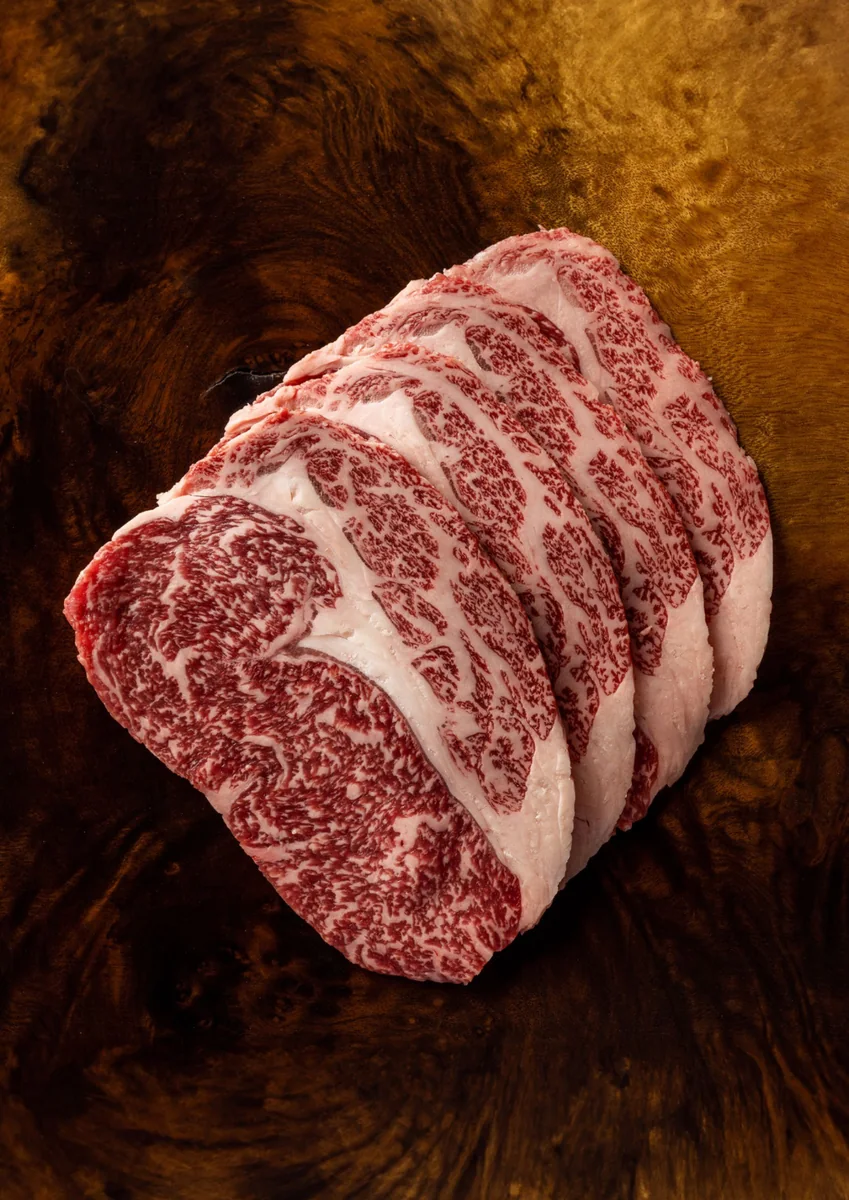
Every festive season, Wagyu appears on more menus across the Maldives — carpaccio at the beach grill, a marbled striploin in the fine-dining room, sliders by the pool. Behind each of those dishes sits a sourcing decision made months earlier, because genuine certified Wagyu does not sit in a Malé cold store waiting to be ordered. It is allocated, reserved, and shipped to schedule. This guide covers what the certification means, how the marbling scale works, and how Wagyu actually reaches a resort dock in the Maldives.
What "certified Wagyu" means
Wagyu refers to specific Japanese cattle breeds prized for intramuscular fat — the fine web of marbling that melts through the meat as it cooks. Outside Japan, Wagyu genetics are raised in several countries, Brazil among them, where herds descend from Japanese bloodlines and certification is controlled by the Associação Brasileira de Wagyu (ABW) — the Brazilian Wagyu Association. The ABW seal on a carton means the animal's Wagyu genetics are registered and verified, not assumed from appearance.
That word — certified — is the line between Wagyu and "wagyu-style". A certified programme can show the registration behind every batch; an uncertified one is asking the buyer to take marbling on faith.
Reading the marbling: the BMS scale
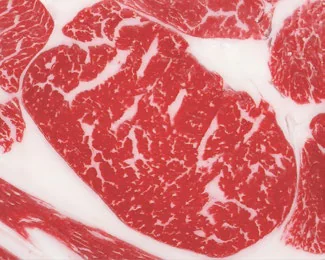
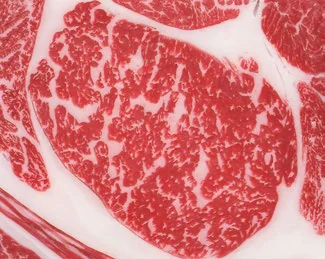
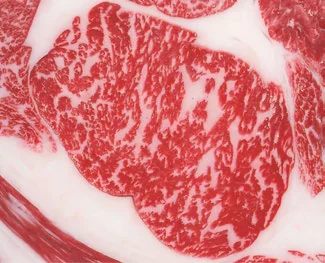
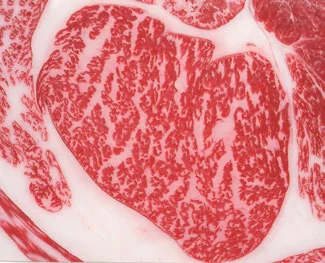
Marbling is graded on the Beef Marbling Standard (BMS), a visual scale where higher numbers mean more intramuscular fat. The band that matters for most resort kitchens is BMS 3–6: marbling that is clearly visible on the plate and generous on the palate, while the meat remains beef-forward and behaves predictably on the grill — through banquet volumes as well as à-la-carte service.
Halal, inspected, and traceable to the Maldives
For the Maldives, provenance is not only a quality question — it is a compliance one. The Wagyu supplied by Unan Trading is Halal, produced in Brazilian plants operating under federal inspection (SIF, the registry of Brazil's Ministry of Agriculture), blast-frozen at −18 °C, vacuum-packed, and batch-traceable from the carton back to the production run, with health certificates accompanying every shipment.
The import itself is handled in-house: Unan's Maldivian company is the importer of record, so the same group that selects the plant in Brazil is the one accountable for the container that lands in Malé — no traders or consolidators in between.
Two ways Wagyu lands on a Maldives menu
The first is the Wagyu FullSet — a whole-animal allocation of roughly 200 kg across twelve cuts, from tenderloin, striploin and cuberoll through brisket, ossobuco and mince, supplied together at one blended rate. One decision covers the fine-dining steaks, the banquet roasts, and the sliders by the pool, and the kitchen draws on one animal rather than many.
The second is certified Cross Wagyu ground beef — BMS-graded, certified crossbred Wagyu, minced. It is the practical route to Wagyu burgers, meatballs and bolognese at a working food cost, and it is stocked in Malé rather than reserved. Kitchens use it year-round; the FullSet is the seasonal centrepiece.
The festive calendar
Festive Wagyu runs on reservation, not stock. For the 2026 season the sequence looks like this:
The Festive 2026 Wagyu FullSet
Twelve cuts · ≈ 200 kg · BMS 3–6 · Halal · SIF Brazil · certified by the Brazilian Wagyu Association. Rate on inquiry.